
 Bookmark
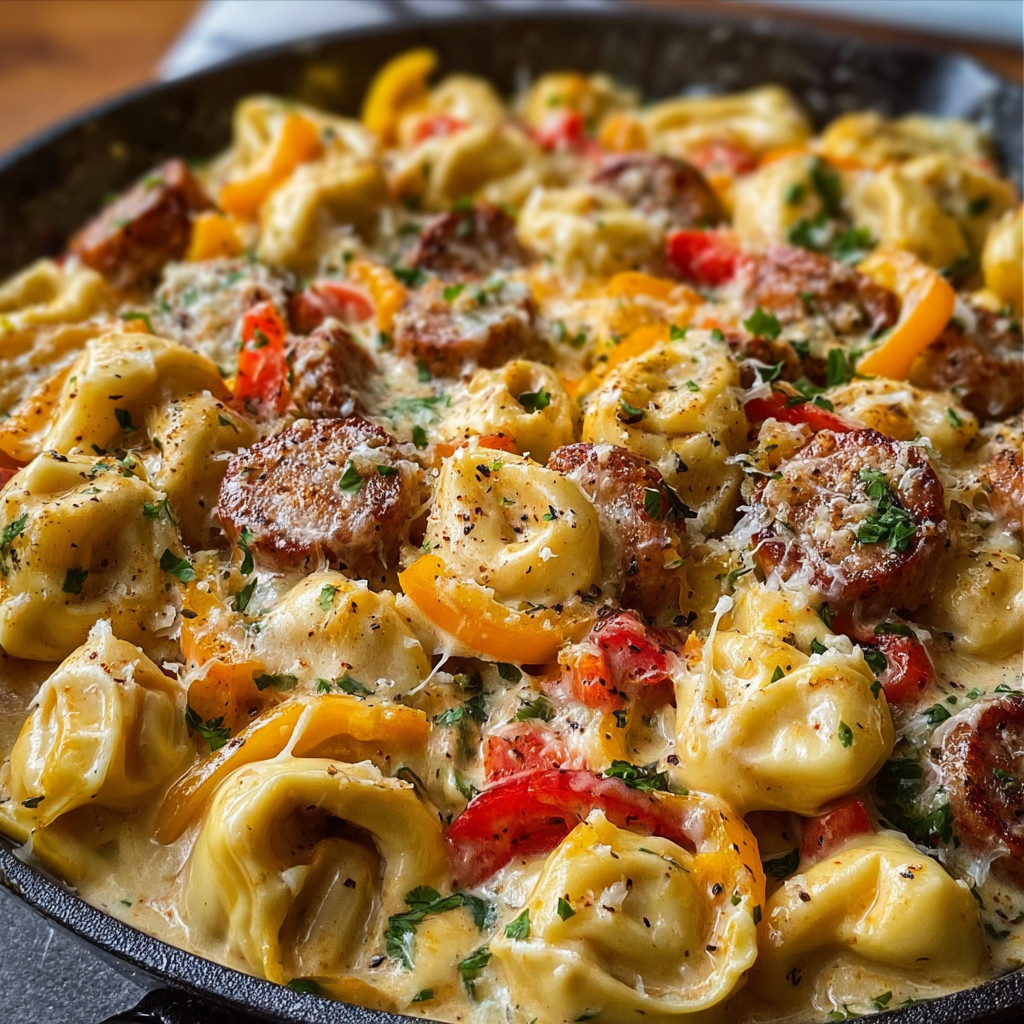
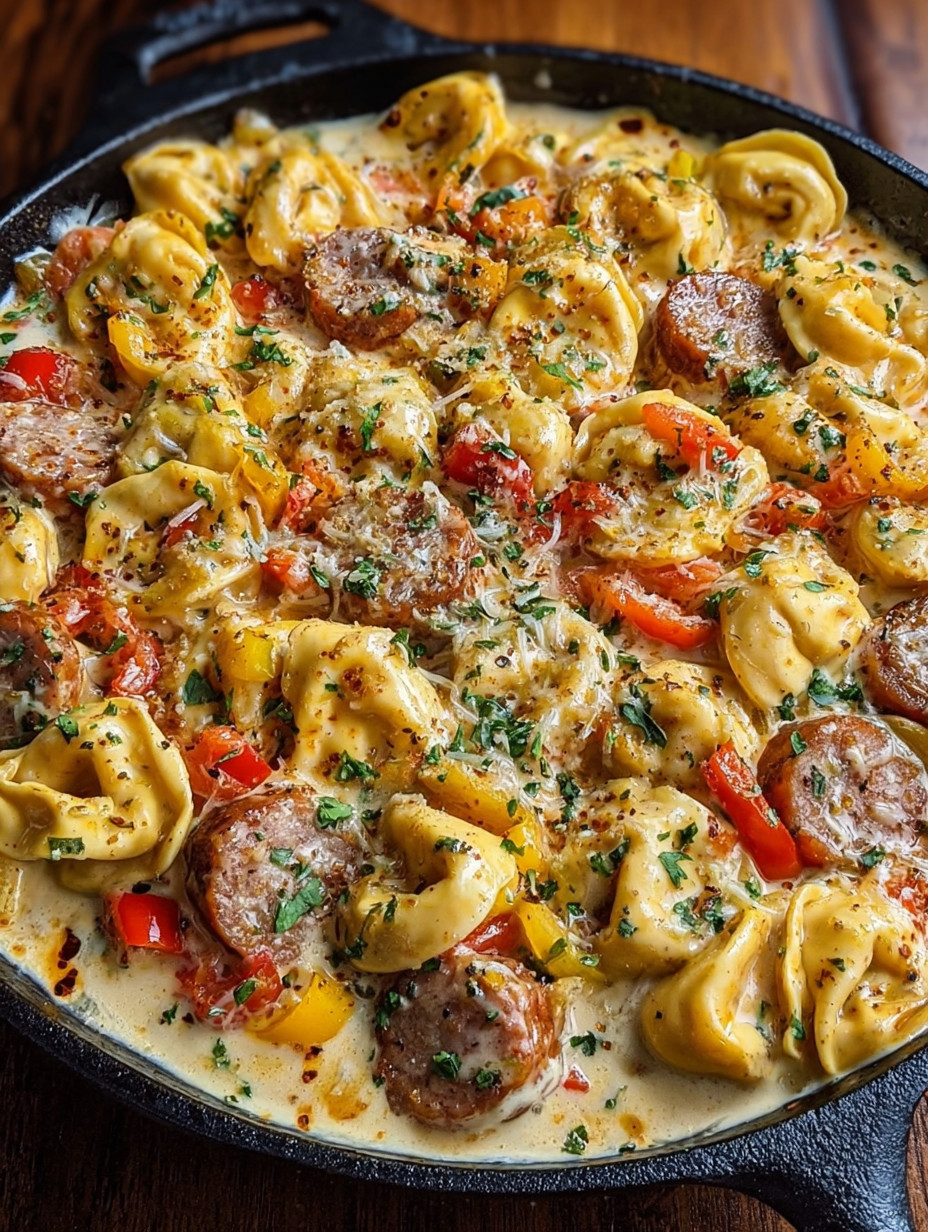
This Loaded Cajun Alfredo Tortellini Skillet is a creamy, spicy, and satisfying meal that combines tender cheese tortellini with smoky sausage, sweet fire-roasted bell peppers, and a rich homemade Cajun Alfredo sauce. It’s perfect for when you want a flavorful dinner that comes together in just one pan without sacrificing taste or texture.
I first cooked this meal when craving comfort food that felt indulgent but was easy to prepare. Now it’s a family favorite that always gets requests for repeat dinners.
Ingredients
- Cheese tortellini: these tender pasta pockets soak up sauce perfectly, look for fresh or refrigerated tortellini for best texture
- Smoked sausage: adds smoky, savory protein that balances the creamy sauce, choose high-quality sausage for best flavor
- Heavy cream: creates the luscious base for the Alfredo sauce, giving it richness and depth
- Parmesan cheese: adds a sharp, salty tang that melts smoothly into the sauce, grate fresh if possible
- Bell peppers red and yellow: bring sweetness, crunch, and vibrant color to brighten the dish
- Cajun seasoning: delivers the signature southern spice blend, pick one that suits your preferred heat level
- Garlic minced: enhances the savory and aromatic qualities of the sauce
- Butter: used for sautéing and enriching the Alfredo base, adding a silky mouthfeel
- Olive oil: helps brown the sausage and peppers without burning the butter
- Salt and black pepper: essential for seasoning to taste and rounding out flavors
Step-by-Step Instructions
- Step 1 Boil the Tortellini:
- Bring a large pot of salted water to a boil. Add the cheese tortellini and cook according to package instructions until just al dente. Drain thoroughly and set aside so it does not overcook in the sauce later.
- Step 2 Sauté the Sausage and Peppers:
- Heat olive oil and butter in a large skillet over medium heat. Add the sliced smoked sausage and cook, stirring occasionally, until it is nicely browned. Toss in the diced bell peppers and minced garlic and cook until the peppers are softened and the garlic is fragrant. This combination builds a flavorful base for the sauce.
- Step 3 Build the Alfredo Sauce:
- Lower the heat to medium-low. Pour in the heavy cream and stir in the Cajun seasoning, salt, and black pepper. Let the mixture simmer gently so it thickens slightly. This will become the creamy, spicy sauce that coats every piece of tortellini.
- Step 4 Add the Cheese and Pasta:
- Gradually stir in the grated Parmesan cheese until it is completely melted and the sauce is silky smooth. Return the cooked tortellini to the skillet and fold it gently into the sauce making sure each pasta piece is fully coated with the creamy Cajun Alfredo.
- Step 5 Let It Simmer and Serve:
- Allow everything to simmer together for 2 to 3 minutes so the flavors meld and the sauce clings perfectly to the tortellini and sausage. Garnish with extra Parmesan or chopped parsley if desired. Serve hot right out of the skillet for maximum comfort and flavor.
 Bookmark
The Cajun seasoning is the soul of this dish, it brings our beloved Southern spices front and center with smoky, peppery, and subtle heat notes that transform the whole skillet. For me, this recipe is a reminder of cozy dinners where everyone gathers around sharing good food and stories. The colors and aromas always brighten my kitchen and mood.
Storage Tips
Store any leftovers in an airtight container in the refrigerator for up to 4 days. When reheating, add a splash of cream or milk and warm gently on the stove to bring back the sauce’s creamy consistency. You can also freeze portions in freezer-safe containers for up to 3 months and thaw overnight in the fridge before warming up. Expect slight texture changes in the sauce but the flavor remains delicious.
Ingredient Substitutions
Chicken sausage or smoked turkey sausage can replace smoked sausage for a lighter protein option. Plant-based cream and vegan Parmesan can be used to make this dish dairy-free with a slightly different flavor profile. Spinach or mushroom tortellini work wonderfully in place of cheese tortellini for variety. If you don’t have Cajun seasoning, combine paprika, cayenne, garlic powder, onion powder, and oregano to mimic the flavor.
Serving Suggestions
Serve with garlic bread or warm crusty rolls to sop up the sauce. A crisp green salad with vinaigrette provides a refreshing contrast to this rich dish. Pairing it with steamed green beans or roasted broccoli adds a balanced vegetable element.
Cultural and Historical Context
The Cajun spice blend is a staple of Southern Louisiana cooking, known for its bold, layered flavors inspired by French Acadian settlers. Alfredo sauce originates from Italy but has been reimagined in Southern US kitchens to embrace local spices and ingredients, bridging two flavorful culinary traditions in this skillet dish.
Pro Tips
- Toast Cajun seasoning in the skillet briefly before adding liquids to amplify its aroma
- Do not overcook the tortellini in boiling water to prevent mushiness after simmering in the sauce
- Add Parmesan cheese gradually and stir continuously to ensure a smooth, creamy Alfredo without clumps
Common Recipe Questions
- → How spicy is the Cajun Alfredo sauce?
The spice level varies with the Cajun seasoning used. It typically offers a mild to moderate heat that enhances flavors without overwhelming the dish.
- → Can I substitute chicken for sausage?
Yes, grilled or shredded chicken works well and pairs nicely with the creamy sauce. Just ensure it’s cooked and seasoned before adding.
- → What type of tortellini is best?
Cheese tortellini is ideal for its creamy filling, but spinach or mushroom tortellini also complement the sauce nicely.
- → Can this skillet be prepared ahead of time?
Components like cooked tortellini, sautéed sausage, and sauce can be made earlier. Combine and heat just before serving for best texture.
- → How should leftovers be reheated?
Gently warm leftovers in a skillet over low heat, adding a splash of cream or milk to refresh the sauce and maintain its smooth consistency.
- → Is a dairy-free alternative possible?
Yes, plant-based cream and vegan cheese can replace dairy ingredients, though the sauce’s texture and taste will be somewhat different.