
 Bookmark
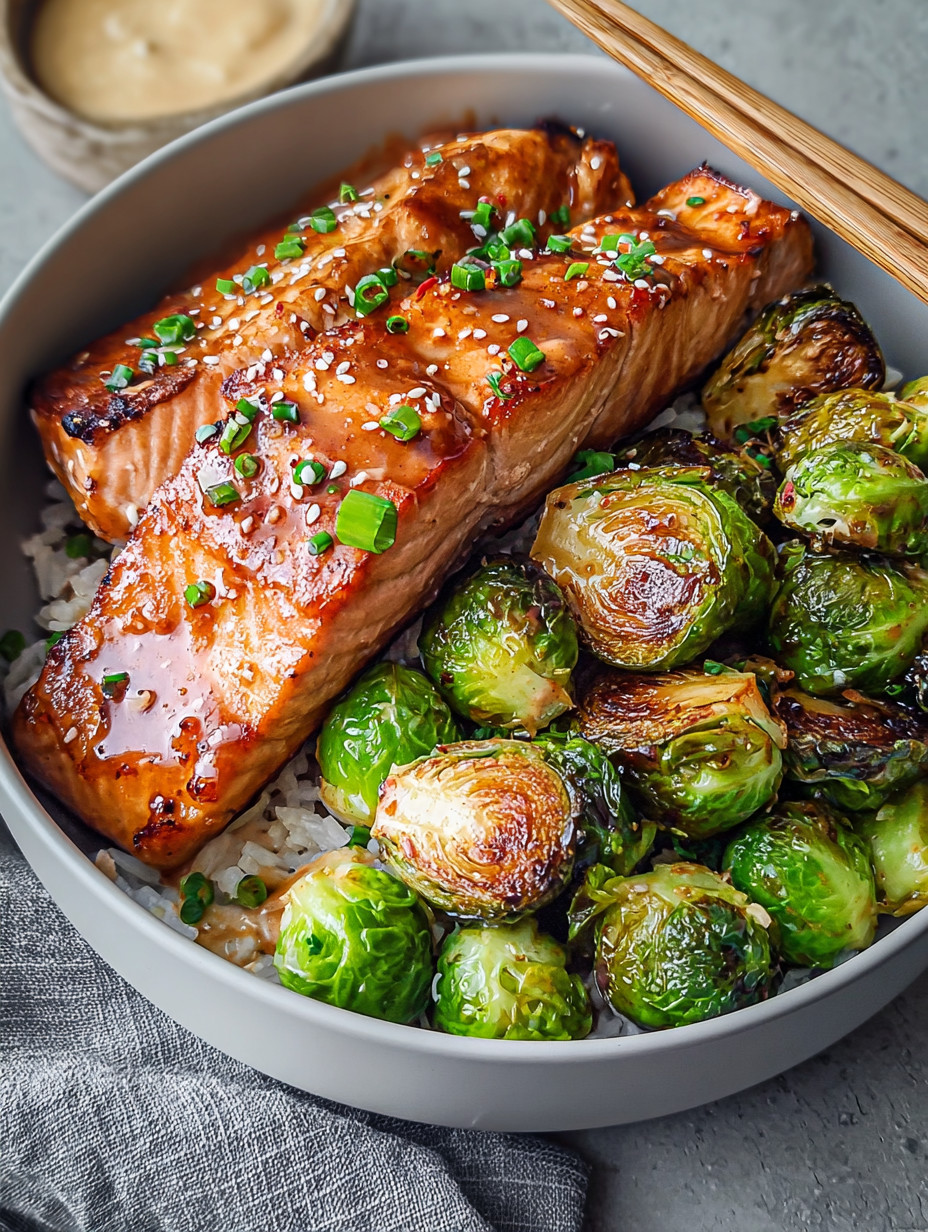
This teriyaki salmon bowl combines a luscious sweet and savory glaze with the satisfying crunch of crispy roasted Brussels sprouts. It is a perfect meal for busy weeknights when you want something flavorful yet healthy. The combination of tender salmon and caramelized vegetables served over rice or quinoa makes this dish a balanced and nourishing choice.
I first made this on a hectic evening when I needed dinner on the table fast and it instantly became a family favorite. Now everyone asks for it regularly because of how well the flavors come together and the crispiness of the sprouts.
Ingredients
- Salmon fillets: fresh and firm for the best flaky texture
- Soy sauce: as the savory base of the marinade, choose low sodium for control over saltiness
- Honey: to bring a natural sweetness that balances the salty and spicy elements
- Rice vinegar: for a subtle tang that brightens the marinade
- Fresh ginger: adds a peppery warmth and aromatic depth, always use fresh for best flavor
- Garlic powder: contributes savory undertones without overpowering
- Red pepper flakes: for just enough heat, adjust according to your spice preference
- Brussels sprouts: should be tight and firm, trimming and halving ensures even roasting
- Olive oil: to coat the sprouts helps them crisp up beautifully
- Salt and freshly ground black pepper: season the sprouts to perfection
- Mayonnaise: forms the creamy base of the sauce, adding richness
- Dijon mustard: gives a slight zing to the sauce balancing the honey's sweetness
- Fresh lemon juice: brightens the sauce with a fresh citrus note
Step-by-Step Instructions
- Make the Marinade:
- Combine soy sauce, honey, rice vinegar, grated fresh ginger, garlic powder, and red pepper flakes in a small bowl. Whisk thoroughly to blend all the ingredients into a rich flavorful mixture that will deeply season the salmon.
- Marinate the Salmon:
- Place the salmon fillets in a shallow dish and pour the marinade over them. Make sure each piece is fully coated by gently turning the fillets. Cover with plastic wrap and refrigerate for at least 30 minutes, or up to 2 hours if you want it more intense.
- Prepare the Brussels Sprouts:
- In a large bowl, toss the halved Brussels sprouts with olive oil, salt, and black pepper. Spread them out on a baking sheet in a single layer to ensure even roasting and prevent steaming.
- Cook the Salmon and Brussels Sprouts:
- Preheat your grill or broiler to medium-high heat for a nicely caramelized finish. Grill the salmon for 5 to 7 minutes on each side. The fish should flake easily when tested with a fork. At the same time, roast the Brussels sprouts in the oven for 20 to 25 minutes, turning once halfway through, until they turn golden brown and crispy on the edges.
- Make the Sauce:
- Whisk together mayonnaise, Dijon mustard, honey, fresh lemon juice, and garlic powder in a small bowl. Blend until smooth and creamy. Taste and adjust if you want it sweeter or more tangy.
- Assemble and Serve:
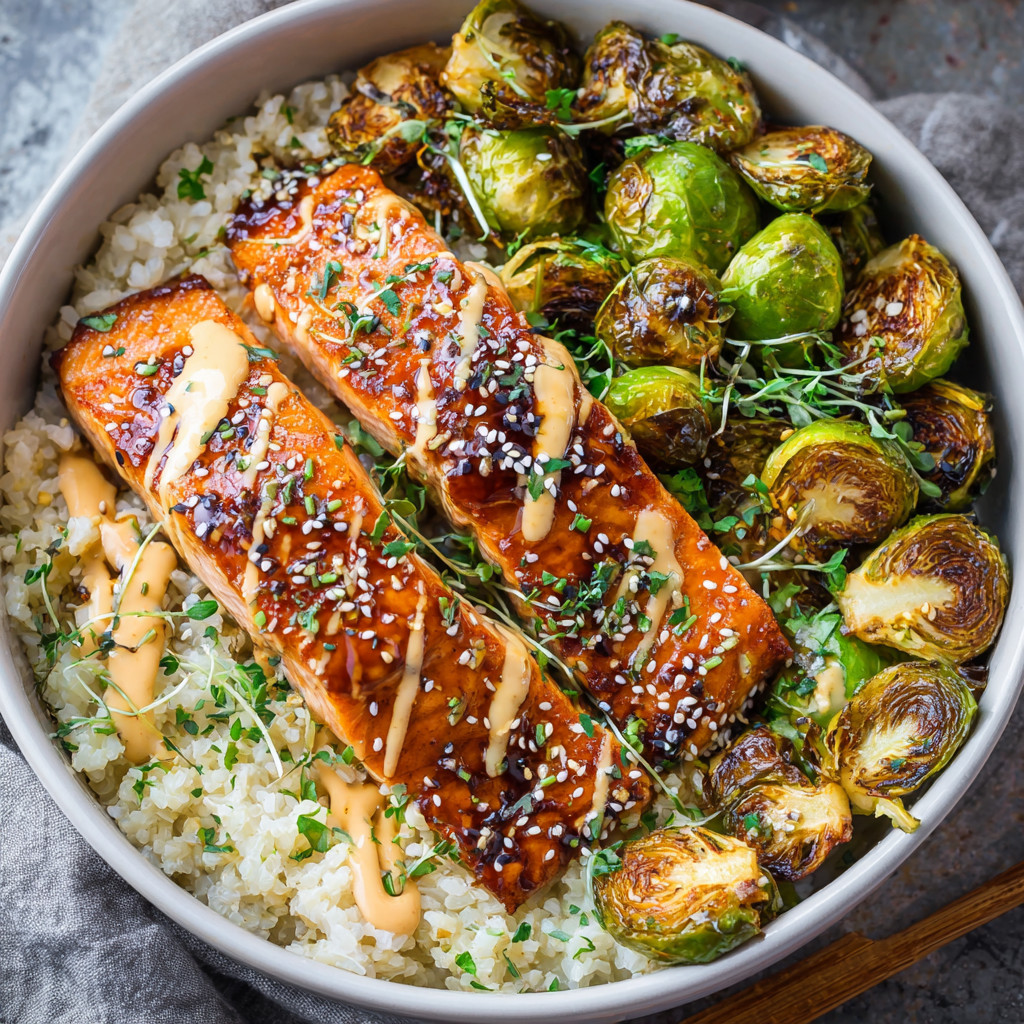
- Place a bed of steamed rice or quinoa in your bowl. Add the grilled salmon fillets on top alongside the crispy Brussels sprouts. Drizzle the creamy sauce generously over everything. For an extra touch, sprinkle with toasted sesame seeds or finely chopped herbs if you like.
 Bookmark
For me the fresh ginger makes all the difference bringing brightness and warmth that ties the whole dish together. A memorable dinner was when my kids discovered the sprouts they had previously avoided thanks to the crispy roasting method. It has truly transformed how we enjoy this vegetable in our home.
Storage tips
Store leftovers in airtight containers in the refrigerator for up to three days. Separate the salmon, Brussels sprouts, and sauce for best texture and flavor when reheating. The salmon reheats nicely in a moderate oven or microwaving in short bursts to avoid drying out. Brussels sprouts regain their crispness when reheated briefly in the oven or air fryer. Avoid freezing assembled bowls but you can freeze the marinated raw salmon fillets for up to three months.
Ingredient substitutions
If you want a gluten-free option replace soy sauce with tamari or coconut aminos. Swap Brussels sprouts with broccoli or green beans if you prefer. Salmon can be swapped for firm tofu or tempeh for a vegetarian version, use the same marinade and cooking method. If fresh ginger is unavailable, finely minced ground ginger can work but fresh is much more flavorful.
Serving suggestions
Serve over steamed jasmine rice for a classic bowl or try brown rice or quinoa for a healthier twist. Cauliflower rice is a great low-carb base that soaks up the sauce beautifully. Garnish with toasted sesame seeds, thinly sliced green onions, or a squeeze of fresh lemon juice to brighten the flavors. Pair with sides like garlic butter rice, steamed edamame, or a fresh sesame ginger slaw for a complete meal. For spice lovers, a drizzle of sriracha or spicy mayo adds a nice kick.
Cultural context
Teriyaki is a popular Japanese cooking technique involving a glaze of soy sauce, mirin, and sugar or honey that caramelizes onto grilled or broiled foods. This recipe takes inspiration from traditional teriyaki with a modern balanced approach using fresh whole ingredients and the addition of nutrient-packed Brussels sprouts. It reflects a fusion style bowl that is both familiar and healthy, suited well for home cooking and meal prepping.
Pro Tips
- Brush salmon with leftover marinade while cooking to build a glossy caramelized finish
- Turn Brussels sprouts halfway through roasting to ensure crispiness on all sides
- Do not overcrowd the baking sheet when roasting sprouts to avoid sogginess
Common Recipe Questions
- → Can I swap Brussels sprouts for other vegetables?
Yes, vegetables like broccoli, green beans, or asparagus offer great alternatives with similar roasting times and textures.
- → Which base complements this salmon dish best?
Steamed jasmine rice is a classic choice, while brown rice, quinoa, or cauliflower rice provide flavorful and nutritious variations.
- → How can I make this dish gluten-free?
Use tamari or coconut aminos in place of soy sauce to keep the marinade gluten-free without sacrificing flavor.
- → Is there a plant-based alternative for the salmon?
Firm tofu or tempeh can replace salmon, marinated and cooked similarly for a satisfying protein-rich option.
- → How do I ensure the salmon is perfectly cooked?
Cook until the salmon flakes easily with a fork and reaches an internal temperature of 145°F (63°C) to keep it moist.
- → Can I add more heat to the glaze or sauce?
Yes, increasing red pepper flakes in the marinade or mixing sriracha into the sauce adds a spicy kick.
- → Is frozen salmon suitable for this dish?
Frozen salmon is fine if fully thawed in the refrigerator before marinating and cooking to ensure even flavors and texture.